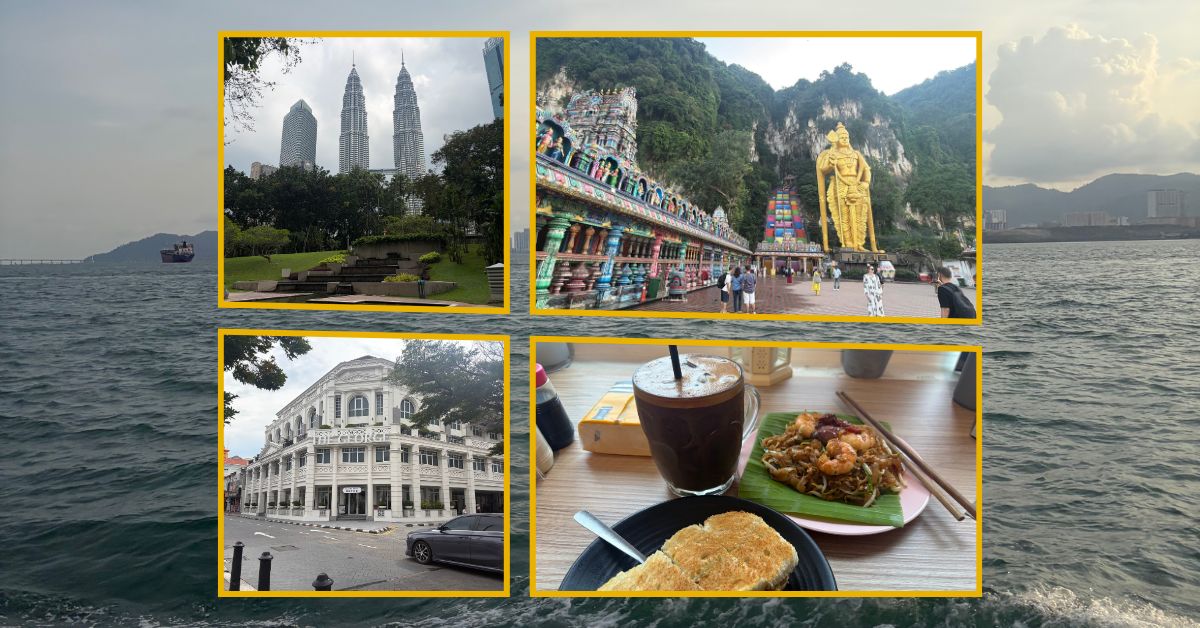
I didn’t plan Malaysia the way most people do. There was no spreadsheet of tourist attractions, no color-coded timeline. What I had was an overnight sleeper train from Quy Nhon, a carry-on bag, my Days at the Torunka Cafe book by Satoshi Yagisawa, and a loose itinerary held together by ‘I-want-to-try-everything-but-still-want-to-chill’ instinct.
This is that trip, Kuala Lumpur for the first four days, Penang for the next six. A Filipina traveler on a Vietnamese nomadic residency, crossing into Malaysia on a Philippine passport with a Compre exam waiting for her mid-trip. If you’re looking for a guide that tells you to hustle through twenty attractions a day, this isn’t it. But if you want to know what Malaysia actually feels like, the food, the streets, the bookstores, the slow morning walks then keep reading.
Getting There: The Overnight Train + Flight Combo
I took the overnight sleeper train from Dieu Tri station (Quy Nhon) to Da Nang, a journey I’d recommend to anyone who romanticizes train travel (this is my first time riding on an overnight train). Lower berth, four-bed cabin, departure at 11:47PM, arrival in Da Nang early morning around six-ish and took a Grab taxi to the airport. From Da Nang International Airport, I flew to Kuala Lumpur International Airport (KLIA).
** An important note as well, you need to buy a sim or e-sim for Malaysia. There’s free Wi-Fi in the airport so it’s easier to activate the sim.
*** You need Malaysian Ringgit (MYR) as well but some stores accept credit cards but I would highly suggest having cash especially if you want to buy something from a street vendor etc. You can either go to money changers or just directly withdraw money from an ATM using your Visa or Mastercard (and don’t change the currency, I’ve noticed it has higher fees compared to just withdrawing via the currency of the country you’re in).
From KLIA to the city: Skip the airport taxi queues. Take the KLIA Ekspres 28 minutes nonstop to KL Sentral for RM55. You can book this on Klook (KLIA Ekspres Kuala Lumpur Airport) – you can choose different package options there. From KL Sentral, a short Grab ride takes you anywhere in the city centre.
For Philippine passport holders: You get 21 days visa-free entry into Malaysia. Fill out the Malaysia Digital Arrival Card (MDAC) within 72 hours before arrival at imigresen-online.imi.gov.my it’s free, mandatory, and takes 10 minutes.
Where to Stay in Kuala Lumpur
I stayed at Maytower by Horizon Homes on Jalan Munshi Abdullah, a short walk from Masjid Jamek. The location is unbeatable, you’re at the edge of Chinatown, walking distance from Central Market, Merdeka Square, and the River of Life.
If you’re looking at other options, Agoda has a good spread of places to stay in Kuala Lumpur.
Area tip: Masjid Jamek LRT station is your transport anchor. Everything in the city centre is accessible from here.
Kuala Lumpur: What to Actually Do
Chinatown & Heritage Zone
Start here. The whole area around Jalan Tun H.S. Lee is walkable and dense with character.
Sri Maha Mariamman Temple – KL’s oldest Hindu temple, covered in hundreds of deity sculptures across a five-tiered gopuram. Free entry. Cover your shoulders and knees. Remove shoes at the entrance.
Guan Di Temple – Just next door, this Qing dynasty Chinese temple is all red lanterns and incense. It closes at 3PM so go early.
Jamboo Cafe – The viral monster claw cafe. You ring a tambourine, a claw emerges from the wall and delivers your drink. Absurd and wonderful. Go before noon on weekends to avoid the crowd.
Riwayat Bookstore – Rated 4.8 by everyone who’s been, for good reason. Tiny, indie, and stocked with zines, photobooks, local Malaysian literature, enamel pins, and the kind of books you didn’t know you needed. Opens at 11AM. Next door is LOKL Coffee, get the Kafe Susu (coffee with condensed milk) and stay awhile.
BookXcess Rex KL– A former cinema converted into a floor-to-ceiling bookstore. The architecture alone is worth the visit. Open until 10PM.
Merdeka Square – Where Malaysia declared independence in 1957. The Sultan Abdul Samad Building behind it is best photographed at golden hour. Free, always open.
Central Market– Good for batik, local crafts, and last-minute pasalubong. Prices are mostly fixed but reasonable.
Petaling Street (Chinatown Night Market)– Busy, loud, and full of cheap finds. Watch your bag. Best in the evening when the stalls light up.
KLCC & Bukit Bintang
KLCC Park – Free, and frankly more satisfying than the paid Petronas observation deck if you know where to stand. Walk deep into the park toward the lake and whale sculptures for the unobstructed twin towers shot. Come back at 8PM for the fountain and light show, also free.
Suria KLCC – The mall attached to the towers. Worth wandering for the Tokyo Street food section and Beryl’s Chocolate (Parkson, 1st floor) — free samples of durian, chili, and green tea chocolate.
Bukit Bintang– Walk from Pavilion KL via the air-conditioned elevated skywalk (Level 3). The streets here are KL’s most alive, food vendors, small shops, cafes. Jalan Alor, a block away, is the famous food street: satay, BBQ seafood, Apam Balik, Cendol. Best after dark.
Saloma Link Bridge– A short Grab from Jalan Alor. Visit 7:30-10PM for the LED light show and the best nighttime Petronas Tower views you’ll get anywhere.
Batu Caves
Go early. 7AM means cooler air, almost no crowds, and the best morning light on the 272 rainbow steps. The golden Lord Murugan statue at the base is 42.7 meters tall. The climb takes 15-20 minutes. Inside the main cave, look up, the natural skylight and limestone formations are what the photos never quite capture.
Practical: Free entry to the main cave. Cover knees and shoulders. Don’t hold food in the open, the monkeys are fast and shameless (and let’s face it, they’re cute!and you might get too willing to give them everything you have lol). Bring water, honestly, bring water!
From Batu Caves, Grab straight to KLCC takes about 30 minutes.
What to Eat in KL
Malaysia has a rewarding food scene in Southeast Asia for the price. Here’s what actually mattered (I haven’t tried all of them though but you might try them):
Nasi Kandar – Rice flooded with multiple curries. Ask for kuah banjir (extra curry poured over everything). Nasi Kandar Saddam has been serving this since 1969. Order the Ayam Saddam.
Roti Canai + Teh Tarik – Any mamak stall, any time of day. RM2-4 for the roti, RM2-4 for the pulled milk tea. This is the Malaysian breakfast and it deserves its reputation.
Kafe Susu – Coffee with condensed milk. I had mine at LOKL Coffee on Jalan Tun H.S. Lee. Balanced, not too sweet, not too creamy. Hits differently than anything I’d had before. It has a certain distinct taste that rivals with Vietnamese coffee (Bac Xiu).
Milo Ais – Iced Milo. It tastes like Milo, obviously! But it kinda tastes better here. Nobody can fully explain why.
Midoo Rasa – Authentic Chinese Muslim noodles in Chinatown. I tried the Hot & Sour Glass Noodles with Braised Beef Brisket. The Chongqing-style broth is bold and sour in the best way, not something you’ll find easily back home.
Otak-Otak– Spiced fish paste grilled in banana leaf. The Muar-style version (authentic to Johor) is worth tracking down. Fragrant, slightly spicy, unlike anything else.
Cendol– Shaved ice, coconut milk, pandan jelly noodles, palm sugar. Save this for Penang where it’s even better, but don’t skip it entirely.
Getting to Penang
Train: KTM ETS Platinum from KL Sentral to Butterworth. The journey takes about 4 hours. Book on the KTMB app (online.ktmb.com.my). Choose Standard Forward Window seat, facing forward, window view, power outlet.
Ferry: Butterworth station connects directly to the ferry terminal via covered walkway. Take the ferry to Georgetown, it’s 15 minutes across the strait, RM2, and runs until 11:30PM (do further research cos this might change). Pay by card only (no cash accepted). The crossing at dusk, with the Penang Bridge in the distance, is one of those small travel moments that stays with you.
From the ferry terminal in Georgetown: Book Grab. Tell the driver your hotel name. You’re on the island.
Getting Back to KL
I took a Grab from Georgetown to Butterworth via Penang Bridge to catch my morning train. For the return I upgraded to Business Class. Wider seats, quieter coach, more legroom. Worth it after a week of walking Penang’s streets.
Where to Stay in Penang
I stayed at Grand FC Hotel on Argyll Road, Georgetown. Clean, there is a desk in my room (important if you’re taking the Compre exam, which I was), elevator, free parking, and automated check-in. The location puts you within walking distance of almost everything in the heritage zone.
Penang: What to Actually Do
Georgetown Heritage Trail (on foot)
Penang’s greatest attraction costs nothing. The UNESCO heritage zone is best explored slowly, on foot, with no particular agenda.
Armenian Street – The most photographed street in Georgetown. The “Children on Bicycle” mural is here. So are indie boutiques, cafes, street art around every corner, and Beryl’s Chocolate Story at 5, Lorong Love, a two-storey heritage building with a chocolate museum upstairs and free samples downstairs.
Khoo Kongsi – A Chinese clan house of extraordinary detail. The carvings, the scale, the courtyard.
Cheong Fatt Tze Blue Mansion– Indigo blue, impeccably restored, and one of the most photographed buildings in Malaysia.
Clan Jetties– Wooden stilt houses built over the water by Chinese immigrant communities. Chew Jetty is the most accessible. Go in the early morning before the tour groups arrive.
Penang Street Art Trail– Over 50 murals scattered across Georgetown. Download the map from the Penang Tourism Board website. The best ones are around Armenian Street, Lorong Stewart, and Jalan Masjid Kapitan Keling.
Food in Penang
Penang is, by wide consensus, the food capital of Malaysia. And honestly? The best I’ve eaten on this trip! Here’s the case:
Swatow Coffee – Fully air-conditioned, no tourist trap energy, and the food delivers. Order the charcoal toasted kaya butter bread, the Char Kuey Teow (smoky, fresh prawns, real wok hei), and whatever coffee they put in front of you. Rich, frothy, not acidic, not overly sweet. The kind of coffee that makes you cancel your next plan.
Cara Caro Cafe – A bohemian shophouse at 22 Kampung Malabar with earthy tones, lush plants, retro lamps, and a menu that goes from breakfast to mocktails. I ordered a cocktail on a slow afternoon and it was exactly right. The vibe does most of the work but the drinks hold their own.
Yipin Fresh Noodle House – A local gem on Kampung Malabar. I ordered an egg soup loaded with everything good and it was exactly what I needed. Order the Jus Buah Pala too. It’s nutmeg juice, a Penang specialty you genuinely cannot find anywhere else. Sweet, slightly tangy, with a lingering aftertaste. Try it even if you’re not sure. Especially if you’re not sure.
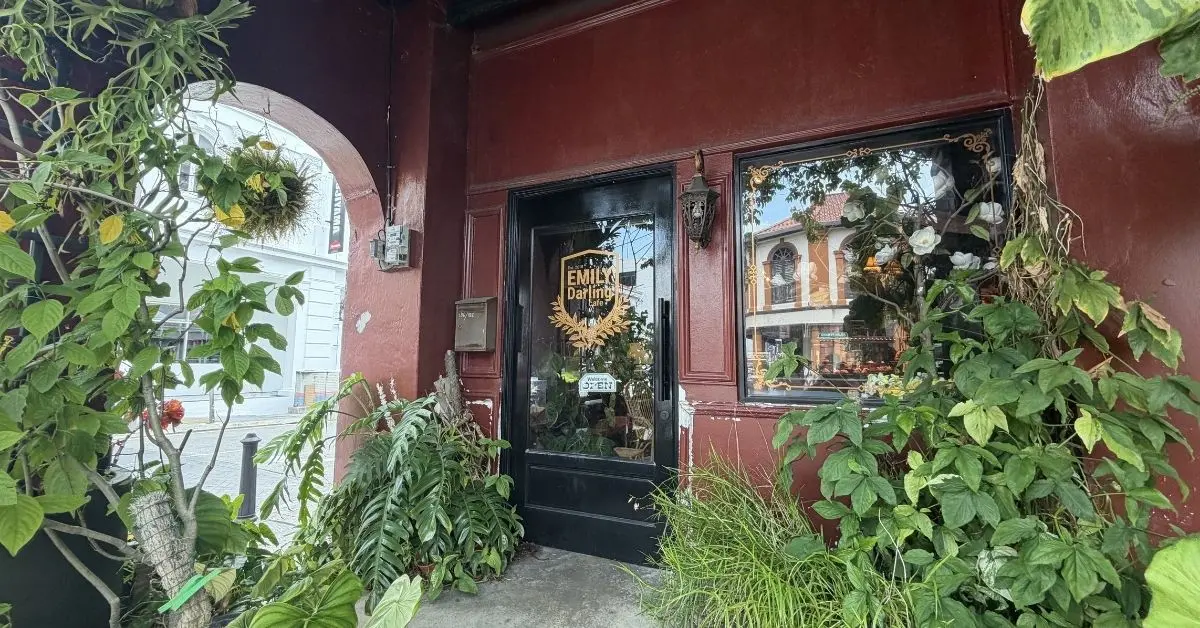
Emily Darling Desserts Shop – Tucked along Jalan Penang, easy to miss if you’re not looking. Cool interior, pretty counter, desserts you want to photograph before you eat. I had the Blueberry Roselle Kombucha (served with an extra bottle to preserve the fizz, tiny bubbles, deep jewel-toned red, pleasantly sour) and a chocolate cake. Jazz played somewhere. Life was good.
Penang Road Famous Cendol – The queue is real. Join it. Shaved ice, coconut milk, pandan jelly, and gula melaka (palm sugar) drizzled over everything. This is the version that ruins all other cendol for you.
Char Kuey Teow – Flat rice noodles, egg, prawns, bean sprouts, Chinese sausage, wok-cooked over furious heat. The wok hei, the smoky breath of a screaming hot wok, is what makes Penang’s version legendary. Lorong Selamat is the address most locals give.
Asam Laksa– Tamarind-based fish broth with thick noodles. Sour, complex, nothing like the coconut laksa you might know. Air Itam market is the classic spot.
Hokkien Mee (Prawn Mee)– Rich prawn and pork broth with noodles. The version in Penang is darker and more intense than KL’s. 888 Hokkien Mee on Jalan Penang is the one to know.
Gurney Drive Hawker Centre – Outdoor hawker stalls along the seafront. Open evenings. The energy here, with the breeze off the strait and dozens of stalls lit up, is worth experiencing even if you’re not particularly hungry.
Chulia Street at Night — Walking distance from Grand FC Hotel. Street food, budget restaurants, backpacker cafes. Good for a cheap, easy dinner when you’ve already walked 8km that day and your feet are done.
Kek Lok Si Temple & Penang Hill
If you have a full day and want to leave the heritage zone, these two are worth the trip together.
Kek Lok Si – The largest Buddhist temple in Malaysia, built up a hillside. The pagoda and goddess statue are striking. Go early. Take the cable car to the top level.
Penang Hill – Take the funicular railway up. The temperature drops noticeably at the summit. The views of the island and strait are the best you’ll get from anywhere.
Morning Walks
Georgetown rewards early risers. The streets are quiet before 8AM, the light is golden, and the heritage architecture looks different without the midday crowds.
If you want a good morning stroll. You can try this:
Best morning loop (~4km, ~1 hour): Start at your hotel → Walk to the Esplanade seafront → Along the waterfront to Fort Cornwallis → Back through Armenian Street → Return via Chulia Street.
Completely safe. Locals out jogging. Good light for photographs.
Practical Notes for Philippine Passport Holders
- Visa: 21 days visa-free. No application required.
- MDAC: Fill within 72 hours before arrival. Free at imigresen-online.imi.gov.my.
- Currency: Malaysian Ringgit (MYR). Always pay in MYR, never let a terminal convert to PHP. That’s Dynamic Currency Conversion and the rate is always worse.
- Credit cards: BPI has lower foreign transaction fees (1.85%) than most Philippine banks. Use it for hotels, malls, Grab, and online bookings.
- ATM withdrawals: Use any banks but I was using RCBC for cash withdrawals but withdraw larger amounts at once to minimize per-transaction fees. Target RM800-1000 for a week, less if you’re using cards for most things.
- Transport: Use Grab exclusively for taxis. Never take unmarked taxis, I heard about overcharging but I haven’t experienced it myself (thank goodness!)
- Ferry payment: Georgetown to Butterworth ferry no longer accepts cash. Bring a card.
- Plug type: Malaysia uses Type G plugs (the three rectangular pins, same as UK). Bring an adapter. You can buy a very handy one at OMNI.
What to Buy
From KL:
- Beryl’s chocolates (dark chocolate, sea-salt chocolate, durian, chili, green tea, the flavors only available in Malaysia)
- Old Town White Coffee sachets
- Teh Tarik sachets
- Local batik from Central Market
From Penang:
- Tambun biscuits (Penang shortcrust pastry, crumbly and addictive)
- Prawn crackers (the Penang variety is different, lighter, more fragrant)
- Armenian Street art prints and postcards
- Peranakan pottery if your budget allows
My Honest Take
Malaysia is not a country that demands anything of you. It doesn’t require extensive planning, fluent Malay, or a high budget. What it rewards is curiosity, the willingness to follow a street to see where it ends, to order something you can’t fully pronounce, to sit in a hawker centre at 8PM surrounded by locals and just let the evening happen.
I went with a carry-on, two books, and a Compre exam hanging over me. I came back with Beryl’s chocolates (yum), a worn train ticket from Butterworth, a scorecard of foods I’d finally tried, and the particular kind of contentment that comes from a trip that asked nothing of me except to show up.
Malaysia is worth showing up for.
Frequently Asked Questions
1. Do Filipinos need a visa to visit Malaysia?
No. Philippine passport holders get 21 days visa-free entry into Malaysia. No application required. You do need to fill out the Malaysia Digital Arrival Card (MDAC) within 72 hours before arrival at imigresen-online.imi.gov.my. It is free and takes about 10 minutes.
2. What is the best way to get from KLIA to Kuala Lumpur city centre?
Take the KLIA Ekspres. It is a nonstop train to KL Sentral, takes 28 minutes, and costs RM55. You can book it on Klook. From KL Sentral, a short Grab ride gets you anywhere in the city centre for around RM10 to RM15.
3. Is 11 days enough for both KL and Penang?
Yes, comfortably. Four days in KL covers the main areas including Chinatown, KLCC, Bukit Bintang, and Batu Caves without rushing. Six days in Penang gives you enough time to explore Georgetown slowly, eat well, and still have quiet mornings to yourself.
4. How do you get from Kuala Lumpur to Penang?
Take the KTM ETS Platinum train from KL Sentral to Butterworth. The journey takes about 4 hours. Book through the KTMB app at online.ktmb.com.my. From Butterworth station, the ferry terminal is connected via covered walkway. The ferry to Georgetown takes 15 minutes and costs RM2. Pay by card only as cash is no longer accepted.
5. What currency does Malaysia use and how should I handle money?
Malaysia uses the Malaysian Ringgit (MYR). Always pay in MYR and never let a payment terminal convert to your home currency. That is Dynamic Currency Conversion and the rate is always worse. For cash, withdraw directly from an ATM using your Visa or Mastercard without switching currencies. Money changers in malls give better rates than those at the airport.
6. Which credit card is best for traveling in Malaysia as a Filipino?
BPI has one of the lowest foreign transaction fees among Philippine banks at 1.85%. Use it for hotels, malls, Grab rides, and online bookings. For ATM cash withdrawals, any card works but withdrawing larger amounts at once minimizes per-transaction fees.
7. Where is the best area to stay in both KL and Penang?
In KL, staying near Masjid Jamek puts you within walking distance of Chinatown, Central Market, Merdeka Square, and the River of Life. Everything in the city centre is accessible from Masjid Jamek LRT station. In Penang, staying in Georgetown puts you within walking distance of almost everything in the heritage zone including Armenian Street, Clan Jetties, and Khoo Kongsi.
8. What is the must-try food in Penang?
Penang is widely considered the food capital of Malaysia. Do not leave without trying the Char Kuey Teow at Lorong Selamat, Asam Laksa at Air Itam market, Penang Road Famous Cendol, and Hokkien Mee at 888 Hokkien Mee on Jalan Penang. For cafes, try Swatow Coffee for the Char Kuey Teow and kaya toast, and Emily Darling Desserts Shop for the Blueberry Roselle Kombucha.
9. What plug type does Malaysia use?
Malaysia uses Type G plugs, which have three rectangular pins, same as the UK. Bring an adapter. You can buy a reliable one at OMNI before your trip.
10. Is Malaysia easy to navigate as a solo female traveler?
Yes. Grab is widely available and reliable, use it exclusively instead of unmarked taxis. Georgetown in Penang is very walkable and safe, especially in the mornings. Stick to well-lit, busy areas at night, keep your bag close in crowded markets, and trust your instincts. Millions of solo female travelers visit Malaysia every year without issues.
2 thoughts on “Malaysia: A Slow Travel Guide to KL and Penang”
Comments are closed.